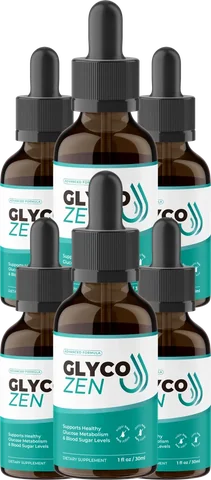
Berberine is a bright yellow plant compound, classed as an alkaloid, found in the roots, rhizomes, and stem bark of several shrubs, including barberry, Oregon grape, goldenseal, and Chinese goldthread. GlycoZen™ names Berberine as one of its four ingredients and has not released an amount.
What berberine is · The plants that contain it · Where in the plant it concentrates · How it appears on a supplement label · Learn more without the guesswork · A word on pigments and names
- Berberine is a naturally yellow compound from plants.
- It occurs in several shrub species across Asia, Europe, and North America.
- The pigment has long been used as a dye.
- GlycoZen names it on the label without an amount.
What berberine is
In chemistry terms, berberine is an alkaloid, one of a large family of nitrogen-containing compounds made by plants. Its most noticeable trait is color. Pure berberine is a vivid yellow, and plants that contain it often show yellow tissue when you cut into a root or peel back bark.
That color explains an older use. Textile workers in several regions used berberine-rich plants to dye cloth and leather yellow, long before anyone isolated the compound in a laboratory.
The name itself has a tidy backstory. Berberine takes its name from Berberis, the genus of barberry shrubs where scientists first isolated it in the nineteenth century. The word Berberis traces back through medieval Latin, and some scholars link it to an Arabic term for the fruit.
The plants that contain it
Berberine is not limited to one species. It turns up in several unrelated groups of shrubs, which is part of why its name appears so widely in botanical references. A few of the best-known sources are listed below.
Because these shrubs live on different continents, the story of berberine is really a story of plants that arrived at the same pigment by separate evolutionary paths, which is a fun fact to share at the dinner table.
- Barberry (Berberis vulgaris): a thorny shrub native to Europe and western Asia, with red berries.
- Tree turmeric (Berberis aristata): a Himalayan shrub with yellow inner wood.
- Oregon grape (Mahonia): an evergreen shrub of North America with blue-purple berries.
- Goldenseal (Hydrastis canadensis): a woodland herb of eastern North America, named for its yellow root.
- Chinese goldthread (Coptis chinensis): a small plant of Asian mountain forests, named for its golden rhizome.
Ready to start your routine?
GlycoZen: a once-daily liquid, one dropper a day at the same time, with a 60-day money-back guarantee.
Order GlycoZen NowWhere in the plant it concentrates
Roots, rhizomes (underground stems), and stem bark are the parts that typically hold the pigment. That is why botanical descriptions of these shrubs so often mention yellow wood or a golden root. Leaves and fruit generally contain much less, and the berries of barberry are more famous for their tart flavor than for any yellow tint.
The Berberis genus alone contains several hundred species spread across Asia, Europe, and the Americas, which gives the compound an unusually wide geographic footprint for a single plant chemical.
Gardeners know many Berberis species as hedging plants. Their thorns and dense growth make them useful boundary shrubs, and several have leaves that turn striking red or orange in autumn.
How it appears on a supplement label
Labels tend to use one of two styles. Some list the compound plainly as berberine. Others add a chemical form, such as hydrochloride, or name the plant it was sourced from. GlycoZen lists Berberine as one of four ingredients named by the brand, and the brand has not released an amount, so this site does not quote one.
Reading the name carefully matters. The compound and the plants it comes from are different things, and a label that names the compound is telling you about the molecule rather than the whole plant. You can see the complete list on the GlycoZen formula page.
Another label habit worth learning is the difference between a standardized extract and a whole plant powder. The first is made to emphasize a particular compound, the second is simply the ground plant. Labels that spell out which one they use are the easiest to compare.
Learn more without the guesswork
This guide stays with the facts of botany and naming. For fact sheets on many dietary ingredients, the NIH's Office of Dietary Supplements is a trusted public resource, and the FDA's dietary supplements page explains how labels are structured.
To see where this ingredient sits in the bigger picture, read what GlycoZen is, or browse the full set of guides on the blog.
A word on pigments and names
Because berberine is a pigment, you can sometimes see it for yourself. Scrape the bark of a barberry shoot and the inner layer shows a bright yellow-green. Handled in a lab, the isolated compound looks like a fine yellow powder.
On labels, remember that a plant name and a compound name are not interchangeable. A line reading barberry root points to a plant part, while a line reading berberine points to the molecule. Keeping the two straight makes any ingredient list far less confusing.